Repetition and Consistency Critical to Building Community
By RONDA GRAFF
My family has had a trampoline in the back yard for as long as I can remember. To date, no one has had any serious injury from the piece of equipment. Rather, I credit the trampoline with helping my last three children make it to the Nebraska High School state diving championships. As my youngest child prepares for his senior year, he has one more chance to follow in his siblings’ footsteps and qualify for the state diving champs next February in Lincoln. To reach this goal, my husband, who happens to be his dive coach, has been encouraging him to start training now even though the high school season for swimming and diving is a winter sport. This preparation includes spending time on our trampoline, working on flips and tucks and twists that can translate to improved simple dives and lead to harder dives.
My son’s initial response: “But I can’t do a front flip on the trampoline.”
While this may be true, not being able to do something at the start is also true of many things. Very few people sit down at the piano and crank out Billy Joel’s “Piano Man.” Not all of us are Stephen King whose first novel - which just happens to be “Carrie” - becomes a hit. And most people cannot do a front flip, a back flip, or any kind of flip perfectly the first time.
To become good at something it takes repetition, it takes consistency, it takes practice. And perhaps most importantly, it takes making mistakes and learning from those mistakes. In the case of practicing on a trampoline, it takes landing on your head, your back, your shoulder over and over and over before hopefully finding your feet.
Repetition matters when learning a new skill or taking on a new hobby or trying out a new sport. I went golfing recently for the first time in decades, not just in decades at Heritage Hills in McCook but decades at any golf course…and it showed. Thankfully, everyone around me was very kind with their instructions and very generous with their patience. Perhaps I should pick up a golf course more often than once every generation.
Repetition and consistency doesn’t just apply to trying to master a physical skill. Regularity and constancy matters when it comes to building relationships and making connections in your community.
Social connections are built over time. They grow by seeing the same people again and again. People move from strangers to acquaintances to friends.
Frequency also matters because our nervous system learns through repetition. Knowing that you are going to be familiar with the situation and know the people involved helps soothe your nerves, which in turns helps you literally reshape your brain. The frequency and consistency of your practice are exactly what rewires those neural pathways. This principle—often summarized in neuroscience as "neurons that fire together, wire together"—means that your daily inputs physically shape your brain's architecture.
Shared experiences matter, because they give you a story together. Think about those people in your life who you can say one word or one phrase to make them giggle, even years down the road.
And honest moments matter, because they signal safety. Only after time, can you have deep, connecting conversations that lead to even deeper relationships, relationships that stand the test of time.
So where do you start? Building connections doesn’t require a large group of people. In fact, just a few people who you can show up for and who keep showing for you is a great start.
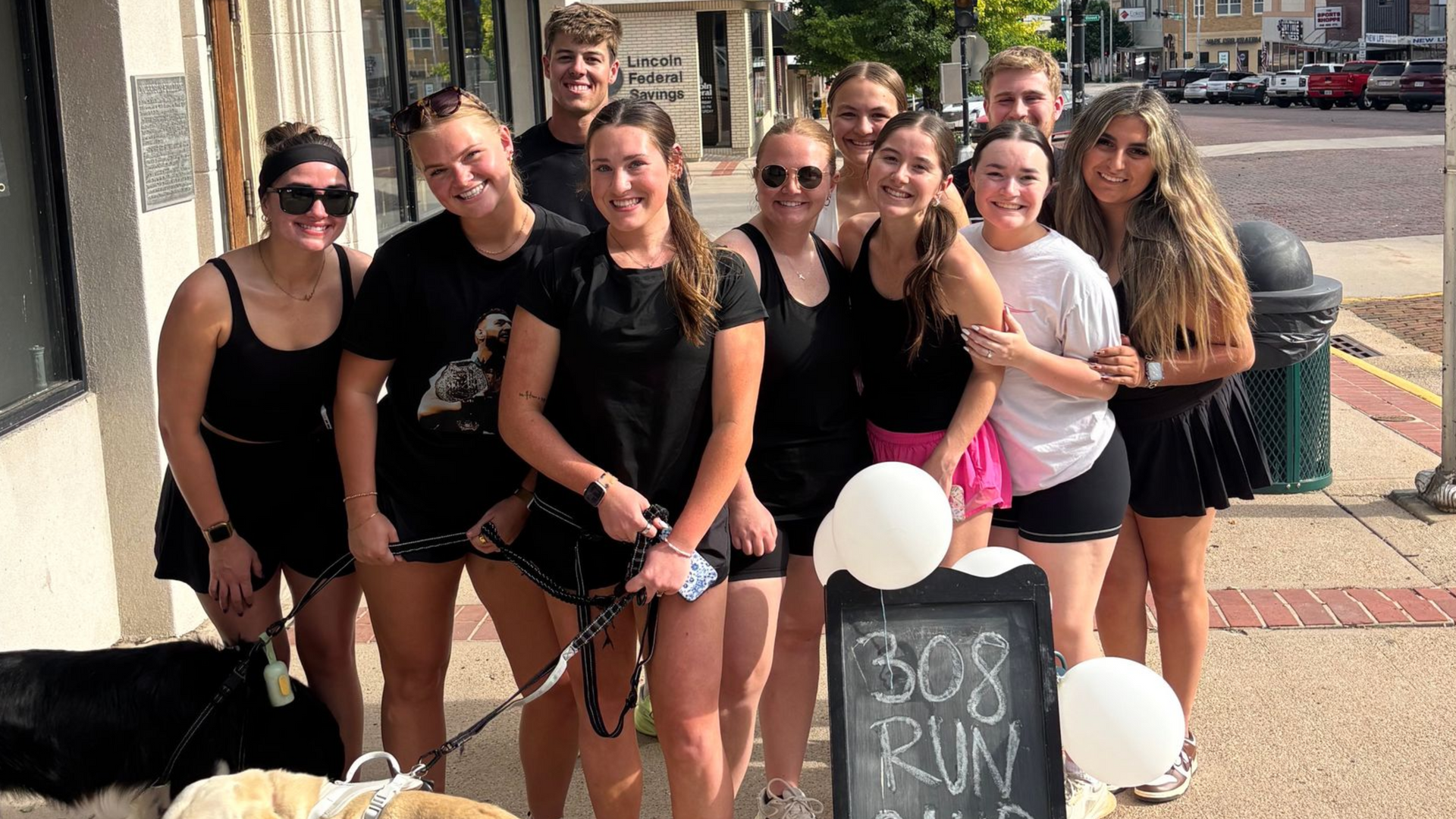
And it doesn’t have to be complicated. Text a few friends for dinner. Call an acquaintance for lunch. Join a walking/running club (like the 308 Run/Walk Club on Monday nights at 6 p.m.at Brown’s Shoe Fit). Show up at the city pool for water walking in the evenings.
There is no perfect time to start; you just need to start and keep going because repetition and consistency is where the magic lives.