At the south end of Norris Avenue in McCook sits what I consider one of our most under-utilized, not-fully appreciated and oft-maligned assets: the Amtrak train service.
Last week, I, along with my two youngest children, hopped the train for our yearly ski trip. We boarded with another half dozen people, a few from McCook whereas others had driven to McCook, specifically to catch the train. (And yes, it was late by an hour, but it can’t be early because we would get left behind.)
While Amtrak has decreased its routes during the pandemic, McCook benefits from having this public transportation with a direct stop (plus a beautiful station with floor to ceiling windows). I realize the train is not for everyone, but it is an asset for those considering our area...one of many of our assets.
Once we reached the ski area, the topic of the train service regularly came up in conversation.
Since I was adequately spaced, along with being covered head to toe because of the pandemic and the snowy weather, I visited on the ski lifts with people from across the county.
Every single one was in awe that I had traveled there by public transportation and by train in particular, avoiding the congestion of Denver and I-70. One of them even commented - unprompted - that the ability to do these types of activities must be easier for me because of the lower cost of living. The former Chicago resident had recently moved to Boulder and admitted that housing and commuting took up large chunks of his time and money.
While the mountains are a natural draw, there are many other reasons people choose a place to move to, settle in and remain living there.
In a report from the Knight Foundation, there are three things needed to develop attachment to a place: social offerings such as spaces and businesses which encourage social gatherings; aesthetics such as physical beauty; and openness where a community is welcoming to all different types of people, ideas and opinions.
For social offerings, McCook and Southwest Nebraska has a good start with locations and businesses which encourage people to sit and share their views, from the tables at Sehnert’s Bakery to the benches in Norris Park. And with Norris Alley and the K9 Korner Dog Park in the works, hopefully we’ll soon have even more spaces to be social.
As for aesthetics, we don’t have mountain vistas or ocean views. But we have beautiful lakes surrounding us, ample space for walking, hiking and hunting and a river which has water for kayaking and floating...part of the year.
And we aren’t lacking in man-made features either. Throughout McCook, we have beautiful architecture, from the columns of the old post office on Norris Avenue to Nebraska’s only Frank Lloyd Wright-designed home. And again, there is potential to create even more aesthetically-pleasing areas from building-sized murals to new hiking trails at Red Willow State Recreation Area.
But it is the third area where we need to make sure each and every one of us are intentional. People choose to move to a place, stay in a place or leave a place because they feel included and valued. A place must be tolerant and provide plenty of space for socializing where people feel comfortable having friendly and not-so-friendly conversations.
As social scientist and Knight Public Spaces Fellow Eric Klinenberg argues, investment in social infrastructure (including libraries and parks) is critical in revitalizing civic life and ultimately a resilient community, especially during a crisis. As our community moves forward, we have an opportunity to improve engagement, improve inclusivity, improve involvement.
This could come in many different forms. It may mean belonging to a local service organization such as Rotary or the Optimists, where people of all different views come together to make the community better. It may mean hosting a gathering to share opposing viewpoints to reach a common good. Or it may mean investing with private and public funding in those physical spaces which bring people face-to-face to share ideas rather than hiding behind a screen with their thoughts.
It is up to each and everyone of us to create a place where people want to come to...and stay. We’ve got a good start, but we also have a lot of potential to make this an even better place to call home.
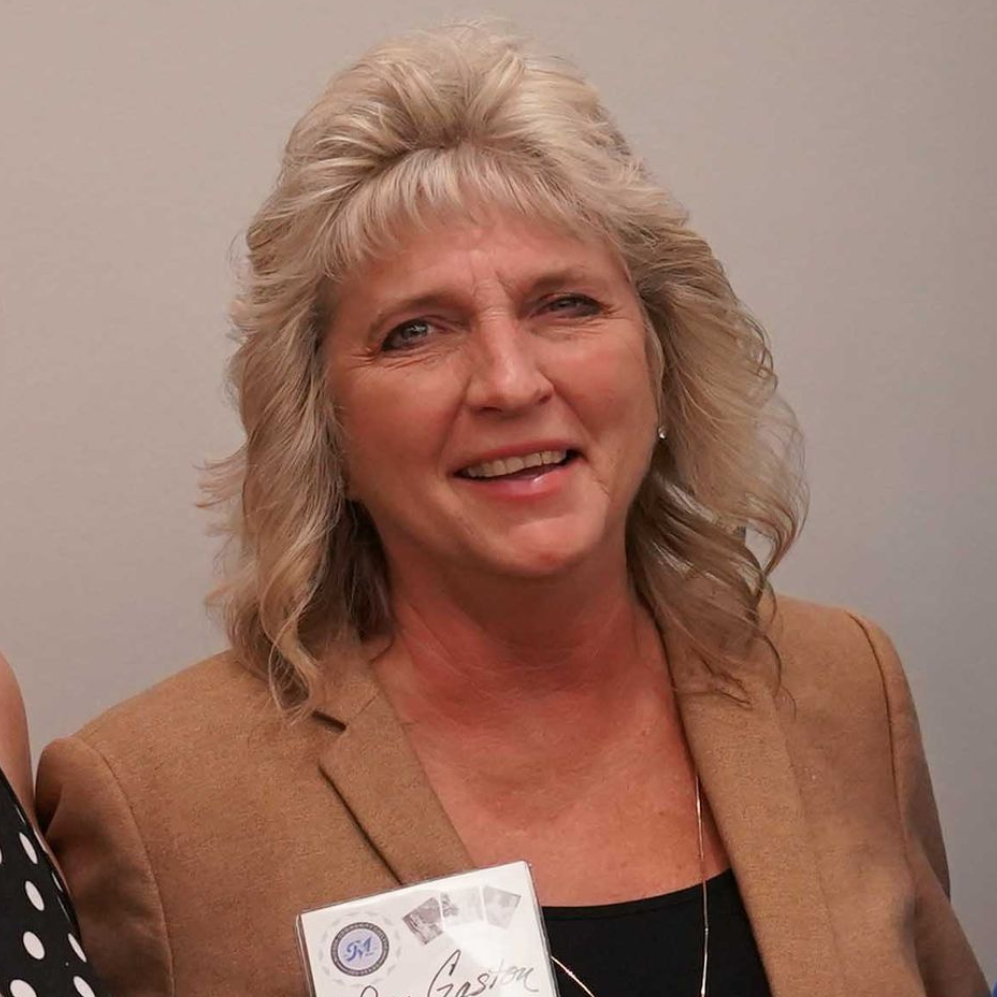
While many people think volunteering is for older residents, serving your community has no age restrictions. And young people can regularly be found lending a hand or offering their services in their hometown. The November 2025 McCook Volunteer of the Month recognizes one of many young people are working to make their community an even better place to call home: Grady Riemenschneider. Currently a senior at McCook High School, Grady volunteers with a wide variety of organizations and groups. As a four-year member of the McCook Community Foundation Fund’s Youth Change Reaction, Grady serves as the ambassador for the youth group’s “Cars Under Stars,” the outdoor movie theater at the Red Willow County Fairgrounds. At nearly every showing, he can be found operating the projector and setting up the parking lot, as well as passing along his knowledge to the next ambassador. In McCook’s FFA program, Grady has held officer roles the past four years and is currently the chapter vice president, organized the chapter banquet in 2025 and coached for the conduct of chapter meetings. Along with serving as the president of the Driftwood Feeders 4-H Club, he assists with setup, tear down and fundraising for the dog show and helps fellow members train their dogs. Grady steps in to help and lead at local events, including Prairie Plains CASA’s Kick in’ It Up for CASA and the Cajun Broil; the Edward Jones Alzheimer’s Walk; operating sound boards for various groups; and Feed the Farmer. And he has served as a youth leader at McCook Christian Church for elementary youth since approximately 2018 as well as stepping up to ensure the ag program ran smoothly during a teacher’s maternity leave Upon request from his mother about some of Grady’s activities, Sharleen noted that he is the “Chief Household Operations Officer: first responder for Mom’s to-do list, go-to chauffeur and caretaker for his favorite sidekick (a.k.a. his nephew), and the family’s unofficial event planner who somehow keeps everyone together without a clipboard.” The McCook Philanthropy Council recognizes a volunteer every month who is doing good work in McCook and Red Willow County. If there is a volunteer in the community who should be recognized, please contact the McCook Chamber of Commerce at 308-345-3200 or visit McCook Volunteers on the McCook Community Foundation Fund’s website, mccookfoundation.org to complete a nomination form. The only requirement is that the nominee must be a resident of McCook or Red Willow County but please have information about the nominee along with where and how they volunteer in the community. The volunteer honoree is selected monthly by the McCook Philanthropy Council.

The names of those people who have made a generational impact on McCook and Southwest Nebraska is a long list. Many of them are working day-in, day-out right now to make their mark on the community. And then there are those people who no longer call McCook home but still make an impact long after they are gone. Allen Strunk is one of those people. Allen passed away on Nov. 1 at his home in Las Vegas, Nevada but he never lost the love of his hometown. Born and raised in McCook, Allen was a member of an already well-known family, Harry and Arlene Strunk. The Strunks started and published the McCook Daily Gazette, with the motto, “Service is the rent we pay for the space we occupy in this world.” A saying that was so important that Harry had it etched at the top of his downtown newspaper office on Norris Avenue. That sense of service was passed along to Allen, who continued to serve his community as he took over leadership of the Gazette. I didn’t know Allen personally until he came back for visits years later. Even though my first job upon arriving in McCook was at the McCook Daily Gazette and Allen had turned over the publishing reins to Gene Morris many years prior, the Strunk legacy loomed large. He was instrumental in the building of the then-new YMCA, moving the facility from downtown to its current location next to the McCook High School. He was a key player in the new hospital, again moving from one location to a new expanded space. And McCook Community College benefitted his involvement in an expansion. Those projects continue to impact McCook today. And the support didn’t stop just because Allen retired from the Gazette and left McCook. There are programs the Strunks are involved in that benefit McCook and Southwest Nebraska. The Strunks continue to support Santa Claus Lane, which is overseen by the McCook Chamber of Commerce. And which after a few years of decline is seeing a resurgence of enthusiasm and nostalgia for the decorative holiday pieces lining Norris Avenue. Allen funds the annual McCook Area Outstanding Teacher award, which provides a financial prize to several teachers every year. And Allen recognized the work of the McCook Community Foundation Fund, providing a donation several years ago so that he could see its impact while he was still alive. This has led MCFF to consider how they will recognize and remember Allen for years to come. Because of his belief in service to his community, this could mean more recognition for the countless volunteers who keep our community thriving. It could be a day of community service, to see how many people can come together to make something happen. It could be a celebration for all the great things happening in our community. During Allen’s memorial service this past week in McCook, his step-daughter-in-law read the poem, “The Dash" by Linda Ellis, who published it in 1996. It reflects on the meaning of the dash between the birth and death dates on a tombstone. The dash is a reminder of everything that happens between the moment a person is born and the moment a person dies. The dash emphasizes the importance of how one lives their life during that time. The dash prompts a person to think about living, rather than worrying about dying. Ultimately, the dash is where all the good - and the bad - happens. And Allen Strunk made the most of his “dash,” both in his community and within his family. We can’t all run a newspaper. We likely aren’t going to etch our favorite saying into a building. But we all need to consider how we are paying the “rent for the space we occupy in this world.” And we can all make a difference in our hometowns, whether we currently live in them or even if we haven’t stepped foot on the main street in years.